
Checking Criminal History in Dyer County
Start by defining what the record must answer. The Dyer County Jail is the first stop for present custody. The Circuit Court Clerk holds the docket, charging paper, judgment, and sentence for a filed county case. A city police department or the sheriff keeps its own incident narrative. TBI then compiles qualifying Tennessee arrest cycles from fingerprint submissions. These sources overlap, but none replaces the rest. Bring a full legal name, spelling variants, an approximate event year, and any case, citation, incident, or booking number already known.
For a sound Dyer County criminal record search, move from the newest local record to the final court result. Ask for the exact document, not a vague background search. A clerk can quote the current copy or certification cost before work begins, while an arresting agency can apply any lawful redaction to its report.
- Check the official jail roster for current custody, then call 731-285-2802 if its embedded frame fails or the event is new.
- Call General Sessions at 731-286-7809 for misdemeanors and early felony proceedings, or Circuit at 731-286-7808 for felony indictments and outcomes.
- Request the incident or arrest report from the sheriff, Dyersburg, Newbern, Trimble, DSCC, or THP, based on the agency named in the file.
- Use TORIS when the question calls for a Tennessee-wide, fingerprint-supported history rather than only a Dyer County event.
- Compare the booking allegation with the filed charge and disposition. Order a certified judgment when proof of the court outcome matters.
Dyer County's Two Record Hubs
Dyersburg contains the two chief Dyer County records hubs, but they serve different needs. Room 200 at the courthouse, 101 West Court Street, is the route for Circuit and Criminal Court dockets, judgments, sentences, and certified dispositions. General Sessions records are in the same courthouse. The sheriff and jail at 401 East Cedar Street handle current custody, bookings, rural incident records, and sheriff-created arrest material. City police reports stay with the city that created them.
The official Dyer County directory shown here helps confirm the courthouse identity and county contacts.

The directory reinforces a useful rule: Court Street answers what happened in court, while Cedar Street answers who entered local custody and what the sheriff created.
Dyer County record path: Current booking → sheriff roster or jail phone; filed judgment → General Sessions or Circuit clerk; rural report → sheriff; city report → creating police department; statewide history → TBI TORIS.
Tennessee Official Background Checks
The Tennessee Bureau of Investigation Criminal Records Unit operates TORIS, also called TN-FlexCheck. For Dyer County users, a public name-based request costs $29 and is nonrefundable. It reports Tennessee misdemeanor and felony arrest history built from fingerprint submissions and matched dispositions. Aliases are not included. Ordinary juvenile information is excluded unless a juvenile was transferred for adult prosecution. The request can therefore add a statewide layer to Dyer County court and jail research, but a possible name match is not fingerprint proof of identity.
Tennessee Applicant Processing Services uses IdentoGO live scan for fingerprint checks authorized by state law. That route requires an agency OCA code, which identifies the approved program. Price and timing can differ by program, so do not apply one agency's quote to every fingerprint request. A person in Dyer County seeking a federal copy of their own history uses the FBI Identity History Summary process instead. Local jail, sheriff, and clerk files remain separate from either state or federal compilation.
Dyer County TORIS Search Limits
TORIS is valuable because it reaches beyond a single Dyer County agency. Yet its source and search method set clear limits. TBI builds the response from fingerprint-supported arrest cycles, but the public user searches by name. A miss may reflect a spelling issue, an omitted alias, a delayed disposition, or an unmatched record. A hit still needs comparison with identifiers and the court file. The official TBI criminal-history interface pictured here states the product scope and payment route.
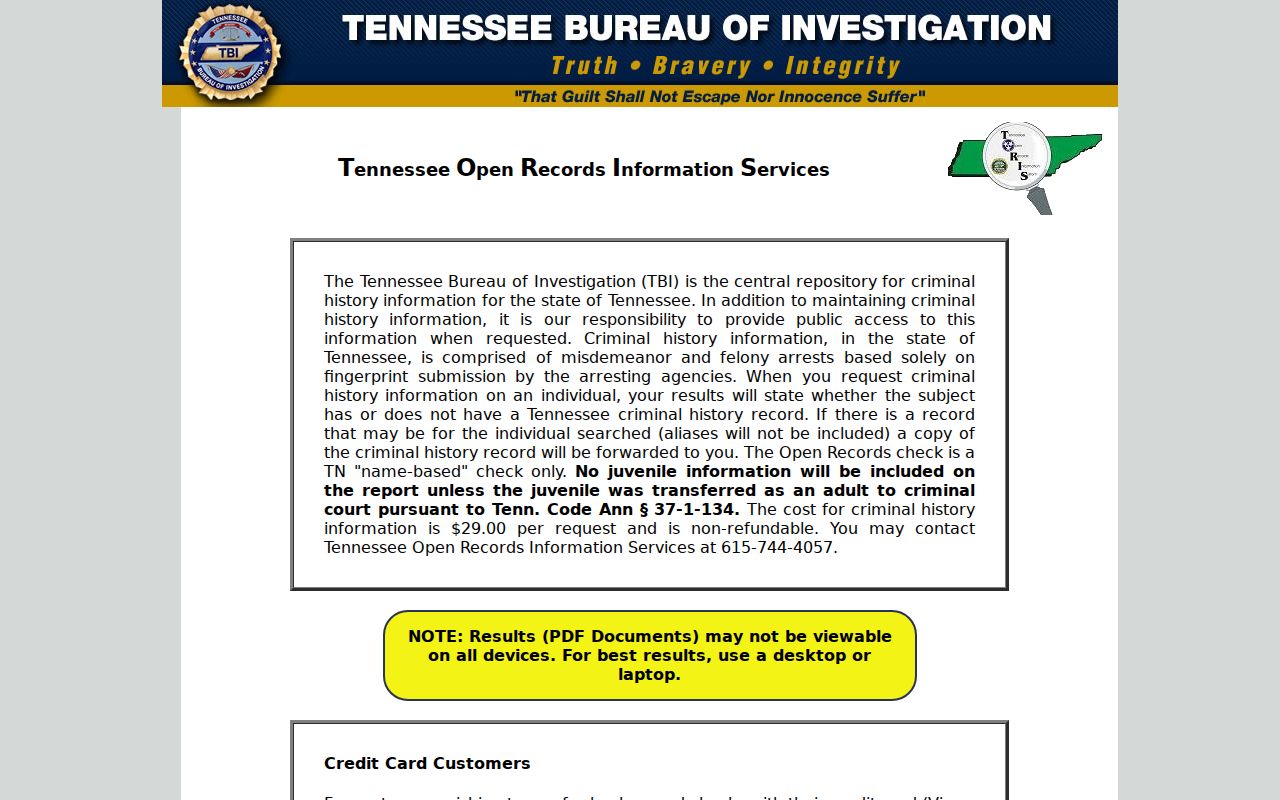
Its state reach complements Dyer County records, but it does not turn a Dyer County name into a fingerprint-confirmed identity.
Before payment, TORIS collects requester contact details. The official requester form shown below identifies the registration fields used to start the transaction.
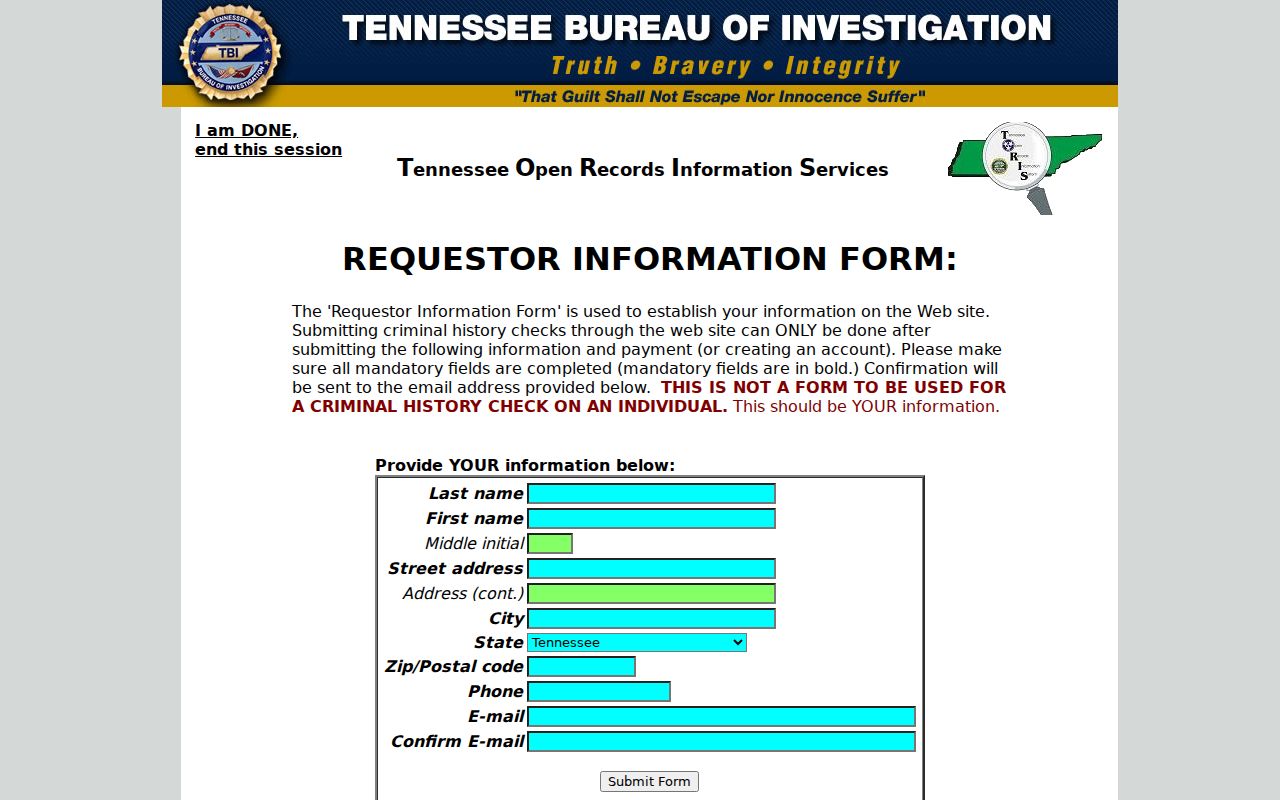
Those fields identify the requester, not the person whose Tennessee record is being checked.
| TORIS field | Required | Purpose |
|---|---|---|
| Requester first and last name | Yes | Identifies the person ordering the check |
| Street, city, state, ZIP | Yes | Provides requester address |
| Phone | Yes | Requester contact |
| Email and confirmation | Yes | Receives confirmation |
| Middle initial | No | Optional requester detail |
Criminal Record Types
Dyer County criminal records are grouped by who created them and when. An incident report describes an event and investigation. A jail booking documents intake and custody. General Sessions or Criminal Court records track the legal case. TORIS compiles eligible Tennessee arrest cycles and matched results, while TDOC's FOIL tracks felony custody and supervision. The TBI registry serves a separate public-safety purpose. A warrant or capias, which is a court order commanding arrest, may appear in a clerk docket even when it is absent from a selective most-wanted post.
Each Dyer County record answers a narrow question. The official Dyer County arrest lookup covers Dyer County agency and booking routes in more depth, while the remaining local categories begin with their named custodians.
- Incident and arrest report: The creating police agency or sheriff keeps the event narrative, subject to redaction.
- Booking record: Dyer County Jail records intake, allegations, bond, status, and release or transfer.
- Court case file: The clerk preserves filed charges, hearings, motions, judgment, sentence, and costs.
- Repository history: TBI links fingerprint-submitted Tennessee arrests to dispositions that agencies report.
- Custody and supervision record: FOIL covers felony incarceration, probation, parole, and release data.
Four Dyer County Arrest Records
One Dyer County arrest can create four distinct records. The arresting officer writes the agency report. Jail staff create a booking file after transport and intake. Fingerprints can start or update a TBI arrest cycle. The clerk then opens a warrant, case, or docket file and records later proceedings. Prosecutors may amend, reduce, dismiss, or replace the intake allegation, so the booking label is not the last word.
The Dyer County sequence is best read as a flow: Police or sheriff report → Dyer County Jail booking → TBI fingerprint cycle → court charge and disposition. A gap at one handoff can make two official records look inconsistent. A recent court judgment may be current even when the statewide summary still lacks its matched result.
- Disposition
- The recorded outcome of a charge or case.
- Nolle prosequi
- The prosecutor's formal choice not to proceed with a charge.
- Indictment
- A grand-jury charging paper used for a felony case.
- Capias
- A court order commanding arrest, often after a missed appearance or failure to comply.
- Docket
- The dated list of filings, hearings, orders, and other case events.
Inside a Dyer County Criminal Record
Dyer County record contents depend on the source. A TBI record may connect identifying details, an arrest cycle, and a matched disposition. The Dyer County court file adds the case number, judge, count-by-count charges, motions, plea or verdict, sentence, and appeal activity. A booking record focuses on intake and custody. FOIL can add a TOMIS number, an eight-digit TDOC identifier, plus a felony offender's location or supervision status. Protected identifiers, sealed material, and sensitive victim or juvenile facts do not belong in a routine public result.
| Name & Identifiers | Name, physical descriptors, birth information, and agency numbers when public |
|---|---|
| Arrest / Booking Data | Date, arresting agency, booking charge, bond, custody status, and release or transfer |
| Charges & Statutes | Alleged or filed offense, count, class, and cited Tennessee law |
| Disposition | Dismissal, nolle prosequi, acquittal, plea, verdict, or another recorded outcome |
| Sentence | Confinement, probation, fine, costs, restitution, and concurrent or consecutive terms |
| Custody / Supervision | Jail, TDOC facility, probation, parole, inactive, or release information |
A certified Dyer County judgment is the strongest local proof of how a filed charge ended. The complete Dyer County criminal court case record can also show why an arrest label changed.
Dyer County Jail Record Snapshot
TDOC's January 2025 jail report counted 220 people against a capacity of 236, an occupancy rate of 93.2 percent. The same snapshot listed 97 pretrial detainees, or 44.1 percent of the population. Those numbers describe custody on one reporting date. They do not measure a current population, a crime rate, or convictions. The sheriff's history says the jail opened in 2003 as a 184-bed facility, while TDOC later used 236. Dating both figures keeps a facility-history statement from being confused with a newer state capacity measure.
The Dyer County public jail roster remains the live local route. If its vendor frame will not load, call the jail at 731-285-2802 and ask about the booking. FOIL serves a different group: sentenced or supervised felony offenders. The free Dyer County Sheriff TN app advertises tips, crime reporting, interactive tools, and safety news. Its listing does not promise an inmate or warrant search.
Note: An arrest and a pretrial jail entry are accusations and custody events, not findings of guilt.
Public Access Laws in Tennessee
The Tennessee Public Records Act generally opens government records unless a statute or rule makes material confidential. A Dyer County requester should contact the creator or custodian, describe the record with a date range and identifier, state whether inspection or copies are wanted, and ask for an estimate before chargeable work begins. Redaction may protect private identifiers, victims, minors, active investigative facts, or sealed material. Dyer County court records follow Tennessee Supreme Court Rule 34 as well as state confidentiality law.
Key Tennessee authorities:
TCA §10-7-503 generally provides access to government records unless another law creates an exception.
Tennessee Supreme Court Rule 34 permits court-record inspection while protecting sealed, deliberative, and other excepted material.
TCA §40-32-101 governs qualifying nonconviction and limited conviction expungement.
Public Chapter 711 of 2026 lets a nonresident obtain a law-enforcement report that pertains solely to that person.
The 2026 change matters because older Tennessee summaries may repeat a resident-only rule without the new own-report exception. It does not erase other Dyer County access limits or redactions.
Dyer County Warrant Search Limits
No official, searchable list of every active Dyer County warrant was found. The sheriff's Crime Stoppers and Most Wanted material is selective. Absence there does not clear a name. Call the sheriff at 731-285-2802 for arrest-warrant or surrender information, and ask General Sessions or Circuit about a bench warrant or capias tied to a docket. Municipal citation matters may instead begin with the Dyersburg, Newbern, or Trimble court clerk.
The official Crime Stoppers page can identify highlighted fugitives, but it is not a complete warrant database. Sealed indictments and juvenile process may remain unavailable. Anyone who learns of an outstanding warrant should identify the issuing court, ask about appearance and bond instructions, and seek legal advice before arranging surrender.
Sealed, Expunged, and Restricted Records
Tennessee expungement can delete qualifying entries rather than merely hide them. Common no-fee outcomes include dismissal, nolle prosequi, no true bill, acquittal, reversal with dismissal, and arrest followed by release without charge. Limited convictions may qualify only after sentence and supervision are complete, the waiting period and offense rules are met, financial duties are satisfied, and no disqualifying conviction applies. Eligibility is tied to the actual docket, not a broad promise based on an arrest label.
The request begins in the Dyer County court that handled the matter. Obtain the docket and disposition, complete the AOC petition and proposed order, satisfy any required costs, file with the clerk, and allow prosecutor and judicial review. Once an order is entered, the court sends it to affected agencies, including TBI. Check both the local file and TORIS after processing because copies outside the official system may persist.
| Dyer County expungement item | Published amount |
|---|---|
| Qualifying dismissal, acquittal, no true bill, or similar nonconviction | Ordinarily no fee |
| Eligible conviction petition | $350 in the AOC handout |
| Current local copy or certification | Not published; ask the clerk |
| TORIS fingerprint-comparison dispute packet | $24, subject to confirmation |
Dyer County Supervision Records
Probation and parole are not the same. A Dyer County court imposes probation and keeps jurisdiction over violations. The Tennessee Board of Parole decides conditional release and parole matters. TDOC Community Supervision officers supervise both groups. Community Corrections is another community-based option for eligible people, while FOIL supplies public felony custody and supervision fields such as status, location, offense, sentence, and release information. The official TDOC FOIL launch page shown here explains the statewide offender lookup route.
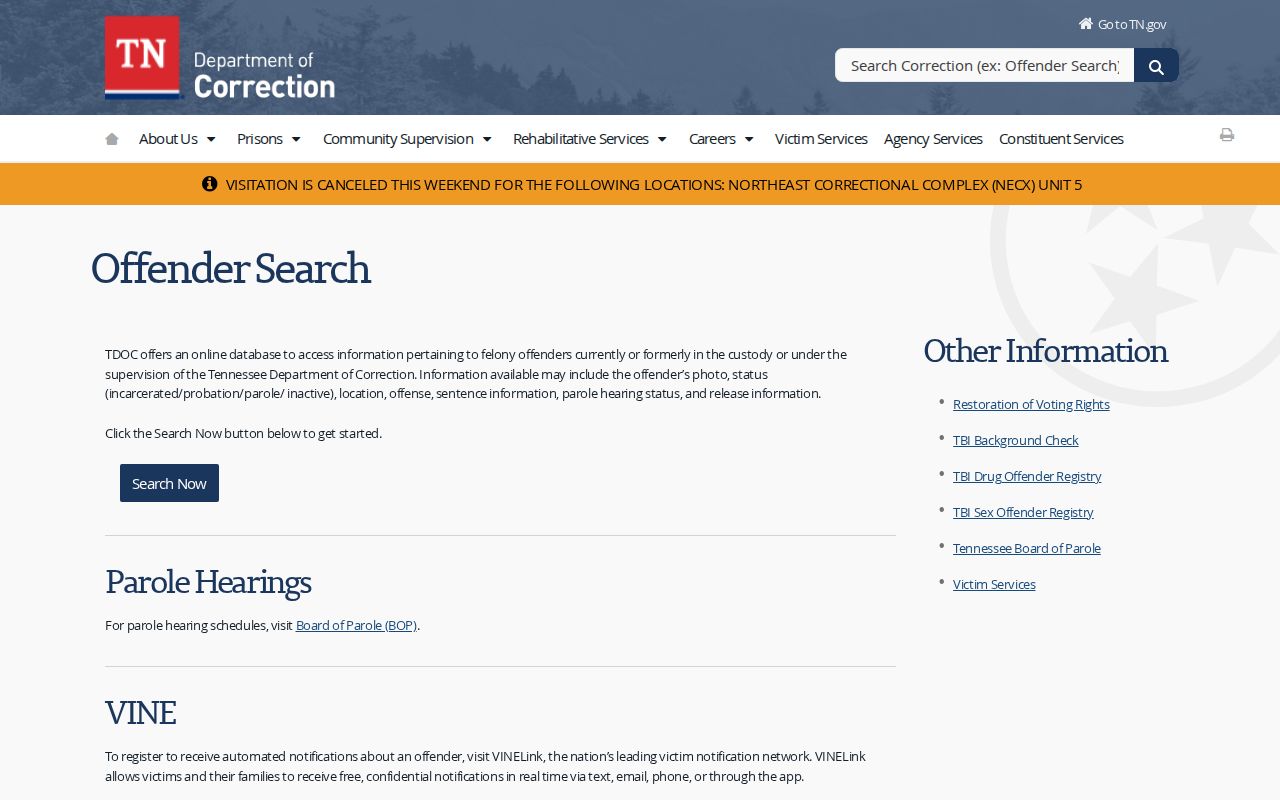
FOIL adds the state felony layer, but the Dyer County judgment remains the source for the sentence the court imposed. District 61 moved in November 2025. The TDOC field-office directory pictured below gives the current Dyersburg supervision contact at 2155 St. Johns Avenue, 731-288-7910.
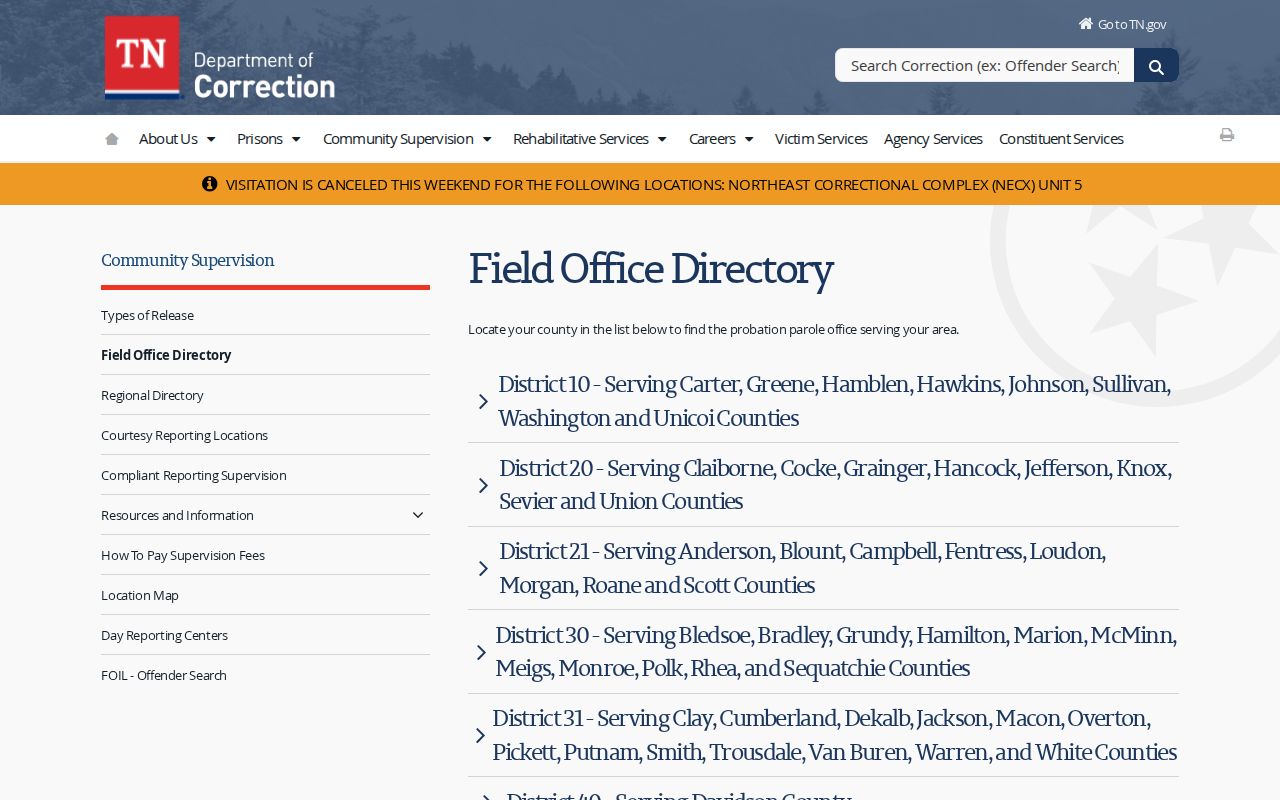
The new address is important when an old directory or saved form still points elsewhere. The Tennessee Board of Parole page shown here identifies the independent state authority that makes parole decisions.
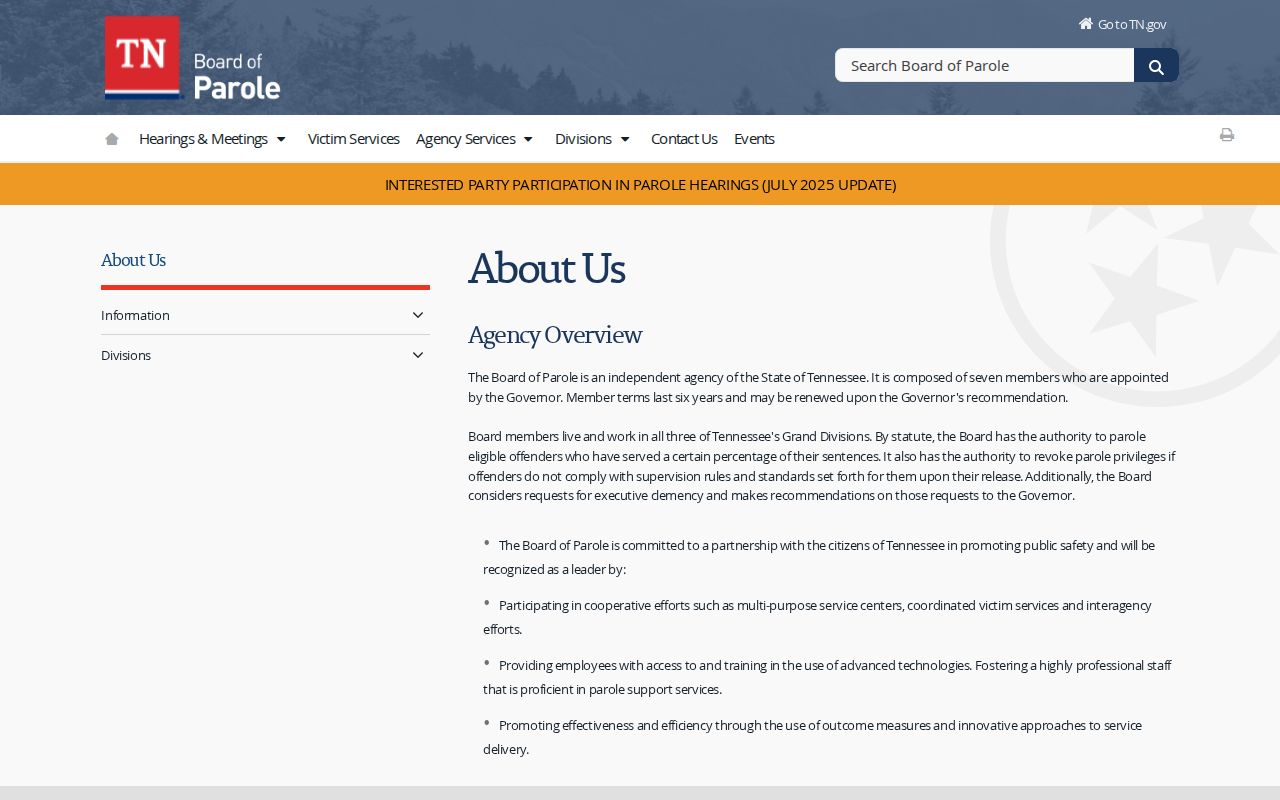
Together, the Dyer County court file, FOIL, District 61, and Board records separate the sentence from day-to-day supervision and parole decisions.
Dyer County Criminal Records by City
Dyer County has three incorporated municipalities. Their police departments create local incident and arrest reports, while municipal clerks keep citation and city-court files. Dyersburg offers a formal online public-record request route and a dedicated police Records line. Newbern relies on its police phone and City Hall. Trimble uses a compact Town Hall route, and a requester must first confirm whether the event occurred on the Dyer or Obion County side.
Dyersburg Criminal Records
Population 16,164 · Police Records line, city request form, and City Court
Newbern Criminal Records
Population 3,325 · Police phone, City Hall fallback, and Monday City Court
Trimble Criminal Records
Population 547 · Town Hall route with a two-county jurisdiction check
City of Dyer is not one of them. That city lies in Gibson County, so its police department is the wrong custodian for a Dyer County event.
Dyer County Expungement Workflow
A dismissal does not always disappear from every Dyer County criminal record as soon as the judge acts. Expungement is a separate workflow. The clerk enters the order, then the arresting agency, jail, TDOC, and TBI update their own systems as required. A missed identifier or delayed handoff can leave an entry visible for a time. The safest response is to keep a certified copy of the order and compare the local docket with a later TORIS result.
The Tennessee courts' TBI expungement instructions explain how the signed order reaches the state repository. Ask the Dyer County clerk which petition, costs, and supporting papers apply to the exact docket. Private copies gathered before deletion may remain outside the official process, and restricted juvenile or sealed court material follows separate access rules.